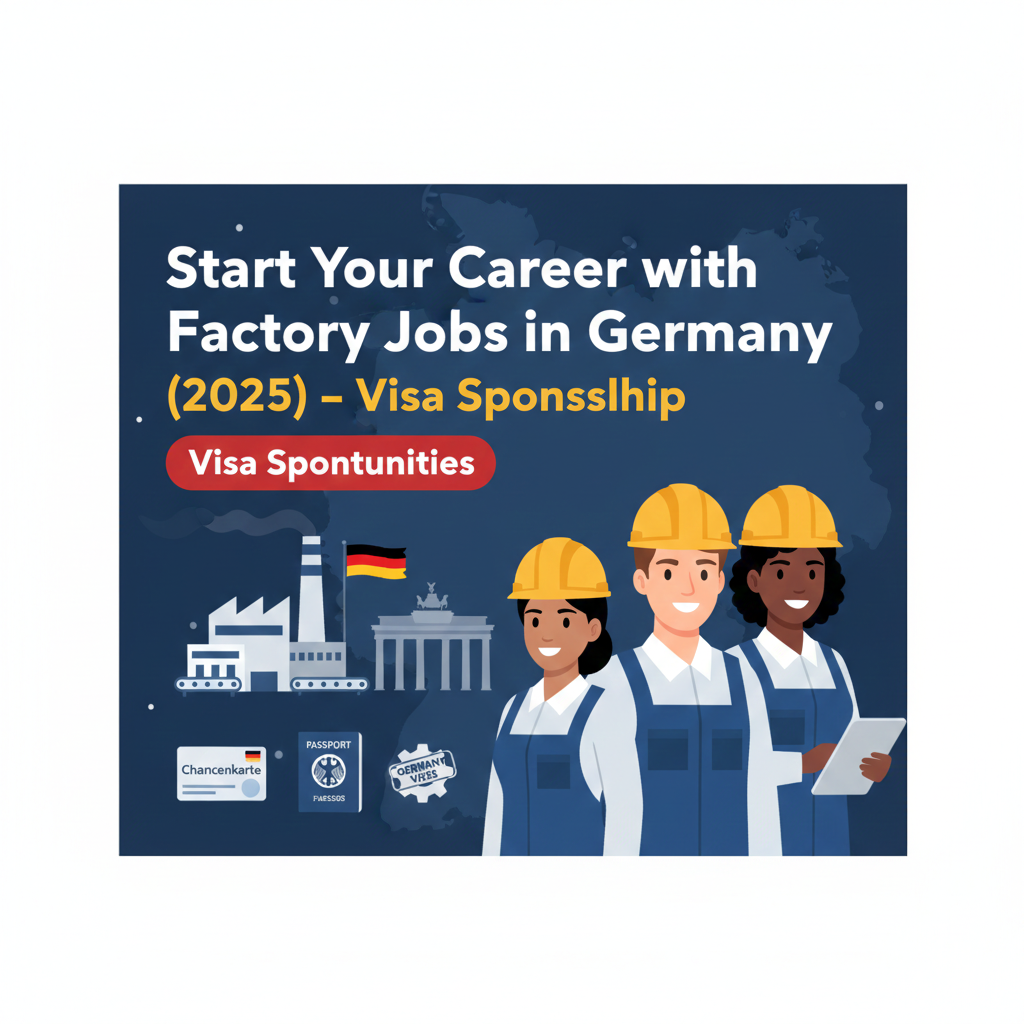
Germany is Europe’s industrial powerhouse. From automotive giants like BMW and Volkswagen to global leaders in chemical production and green energy, the demand for “blue-collar” talent is at an all-time high.
Key Benefits of Working in Germany:
- Attractive Minimum Wage: As of January 2025, the statutory minimum wage is €12.82 per hour, meaning even entry-level roles offer a solid living standard.
- The “Chancenkarte” (Opportunity Card): A points-based system that allows you to move to Germany to find a job, even if you don’t have a job offer yet.
- Strong Worker Rights: Germany is famous for its generous paid leave (usually 20–30 days), health insurance, and job security.
Top Factory Roles for International Workers
You don’t always need a master’s degree to land a sponsored role. Many German “Mittelstand” (medium-sized) companies are looking for:
- Machine & Plant Operators: Monitoring production lines and ensuring quality control.
- Industrial Mechanics: Maintenance and repair of factory machinery.
- Logistics & Warehouse Associates: Managing the flow of goods within large manufacturing hubs.
- Production Assistants: Entry-level roles that require basic technical skills and a high school diploma.
How the Visa Sponsorship Works in 2025
The Skilled Immigration Act has simplified the process for non-EU citizens. There are now three primary paths to enter the German workforce:
1. The Opportunity Card (Chancenkarte)
This is the biggest update for 2025. It allows you to enter Germany for up to one year to search for a job.
- Requirements: You need at least 6 points based on criteria like age, language skills (German A1 or English B2), and professional experience.
- Work Allowance: You can work up to 20 hours per week in a part-time role while searching for your full-time factory contract.
2. The Skilled Worker Visa
If you already have a job offer from a German factory, you can apply for this visa.
- Requirement: Your vocational training (minimum 2 years) must be recognized as equivalent to German standards.
- Benefit: Provides a direct path to permanent residency after just a few years of working.
3. Recognition Partnership
If your qualifications haven’t been fully recognized yet, you can enter a “Recognition Partnership” with your employer. This allows you to start working immediately while you complete the recognition process in Germany.
High-Demand Regions and Companies
While the whole country needs workers, certain states are “hotspots” for manufacturing.
| Region | Key Industry | Top Employers |
| Bavaria (Munich) | Automotive & Tech | BMW, Siemens, Audi |
| Baden-Württemberg | Engineering | Bosch, Mercedes-Benz |
| Lower Saxony | Production | Volkswagen, Continental |
| Eastern Germany | Green Tech & Logistics | Tesla (Gigafactory), DHL |
Step-by-Step Guide to Getting Hired
- Learn Basic German: While some international factories use English, having A1 or A2 German makes you 10x more likely to get sponsored.
- Get Your Qualifications Evaluated: Use the Anabin database to see if your diploma is recognized.
- Optimize Your “Lebenslauf”: German resumes are very specific. They should be clear, factual, and usually include a professional photo.
- Apply via Official Portals: Focus on the “Make it in Germany” job board and LinkedIn.
Salary Expectations: What You’ll Earn
For an entry-level factory role in 2025, you can expect:
- Gross Annual Salary: Between €30,000 and €45,000, depending on the region and your technical skills.
- Shift Bonuses: Most factories pay extra for night shifts or weekend work, which can boost your take-home pay by 15-25%.
Final Thoughts
Germany is moving away from a “degree-only” hiring culture and toward a “skills-based” one. If you are hardworking, have a basic technical background, and are willing to learn the language, the doors to the German industrial sector are wide open in 2025.