
Learn the complete Germany student visa process for 2026. From admission to approval, this guide breaks everything down clearly. Avoid delays, prepare correctly, and secure your study future in Germany. Click to get started.
Why Study in Germany in 2026
Tuition-Free Education Advantage
Let’s be real—education abroad is expensive. The US, UK, and Australia can cost tens of thousands of dollars every year. Germany flips that narrative completely. Most public universities in Germany charge zero tuition fees, even for international students.
That means you’re essentially getting a top-tier European education without drowning in student debt. You only pay a small semester fee, which often includes public transport. Think of it as paying for Netflix but getting a full cinema experience instead.
Global Career Opportunities
Germany is Europe’s largest economy. From engineering to IT, finance to healthcare, job opportunities are everywhere. After graduation, students can stay for up to 18 months to find a job related to their field.
This is a huge advantage. Instead of rushing back home, you get time to build your career, gain international experience, and even transition to permanent residency.
Types of Germany Student Visas
Student Visa (Visum zu Studienzwecken)
This is the most common visa. If you already have an admission letter from a German university, this is your go-to option. It’s typically valid for a few months and later converted into a residence permit.
Student Applicant Visa
Don’t have admission yet? No problem. This visa allows you to enter Germany and complete your application process. It’s like getting backstage access before the main show.
Language Course Visa
Planning to learn German first? This visa is for language courses, but it cannot be converted into a student visa later, so choose carefully.

Eligibility Criteria for 2026
Academic Requirements
Your academic background must match your chosen program. For example:
- Bachelor’s → for undergraduate programs
- Bachelor’s degree → for Master’s programs
German universities are strict about academic relevance. You can’t switch from medicine to engineering overnight.
Language Requirements
Depending on your program:
- English programs → IELTS or TOEFL
- German programs → TestDaF or Goethe
Even if your course is in English, proof of proficiency is usually mandatory.
Financial Requirements (Blocked Account 2026)
Minimum Amount Needed
Here’s where most students pause.
To study in Germany, you must show proof of financial stability. In 2026, the required amount is:
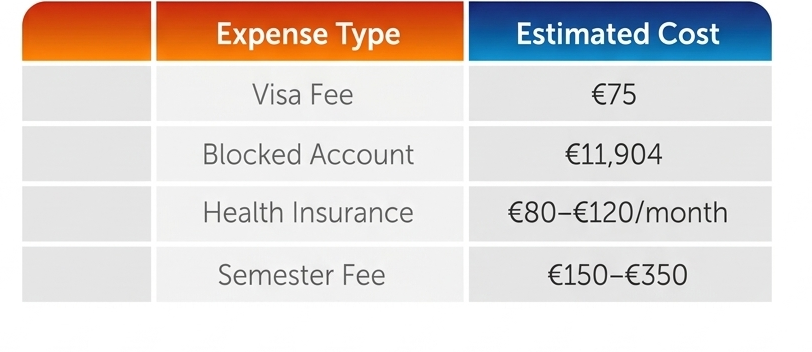
👉 €11,904 per year
This money is deposited into a blocked account (Sperrkonto), and you can withdraw a fixed monthly amount once you arrive.
Alternative Financial Proof
Not everyone uses a blocked account. Alternatives include:
- Scholarship funding
- Sponsorship letter
- Official obligation letter
Still, the blocked account remains the most common and safest route.
Required Documents Checklist
Mandatory Documents
You’ll need:
- Valid passport
- Completed visa application form
- University admission letter
- Proof of financial resources
- Academic transcripts
- Language certificate
- Health insurance
Even a small mismatch in your documents can raise red flags.
Additional Supporting Documents
- Statement of Purpose (SOP)
- CV/Resume
- Passport photos
Think of your documents as your “first impression.” Make them flawless.
Step-by-Step Application Process
Step 1 – Get Admission
This is your starting point. Without admission, there’s no visa. Apply through platforms like Uni-Assist or directly to universities.
Step 2 – Open Blocked Account
Deposit the required €11,904. This proves you can survive in Germany without financial stress.
Step 3 – Book Visa Appointment
Appointments can take time, especially in countries like Pakistan. Book early to avoid delays.
Step 4 – Attend Interview
This is where you prove your intentions. Be confident, honest, and clear about your goals.
Step 5 – Wait for Decision
Processing times vary, but patience is key. Use this time to prepare for your move.
Visa Processing Time in 2026
Typically, it takes 4 to 12 weeks, depending on your country and application quality. Delays can happen due to incomplete documents or high application volumes.
Cost of Germany Student Visa
Common Mistakes to Avoid
Many students fail not because they’re unqualified—but because they’re careless.
- Submitting incomplete documents
- Applying late
- Choosing non-recognized universities
- Weak SOP
Avoid these, and your chances improve dramatically.
Work Opportunities During Study
Students can work part-time:
- 120 full days or 240 half days per year
This helps cover living expenses and gain experience.
After Arrival in Germany
Once you land:
- Register your address
- Convert your visa to a residence permit
- Open a bank account
This is where your new life truly begins.
Conclusion
Getting a Germany student visa in 2026 is not complicated—but it is detailed. Every step matters, from choosing the right university to preparing your documents and proving your finances.
If you approach it like a checklist rather than a gamble, your chances of success increase massively. Germany rewards preparation, and if you play your cards right, it can open doors you never imagined.